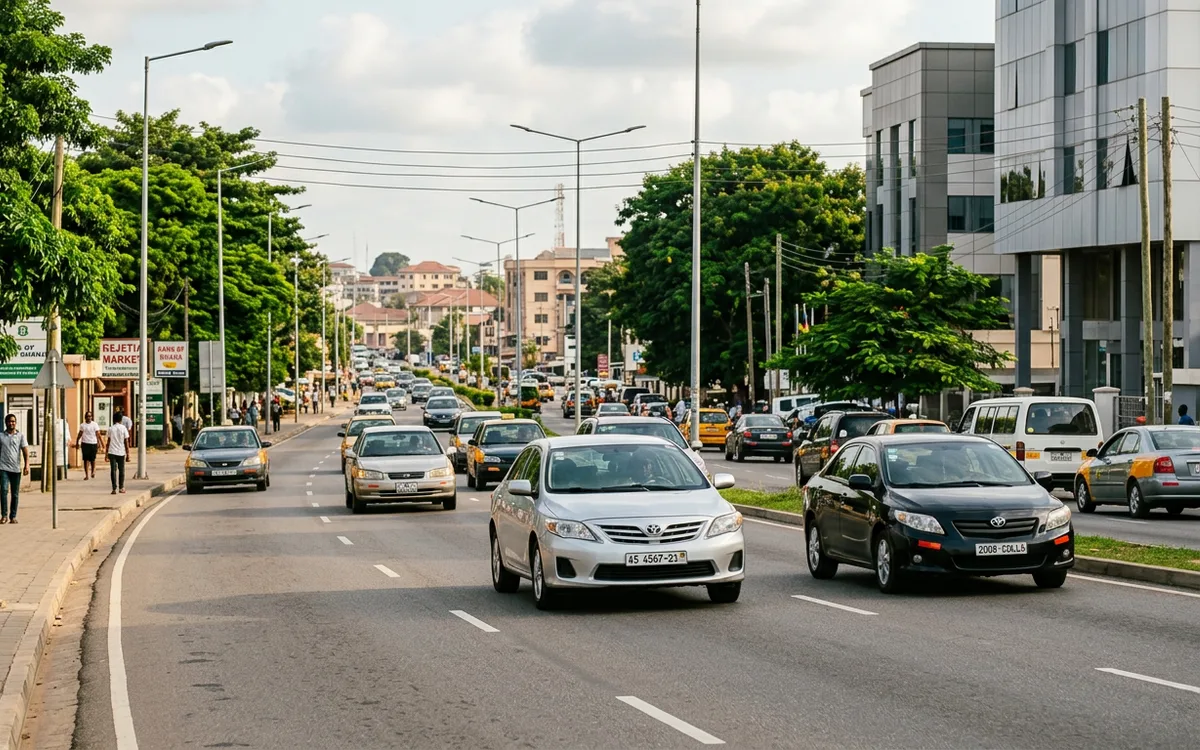
How to Inspect a Home Used Car Before Buying in Ghana
Quick answer: To know how to inspect a home used car before buying in Ghana, start with document verification at the DVLA office, examine engine and transmission fluids cold, check suspension parts for pothole wear, run an OBD-II computer scan, and complete a 20-minute test drive on both city streets and highway stretches.
Buying a locally used vehicle requires careful evaluation to ensure you do not inherit hidden mechanical breakdowns or legal liabilities. Knowing how to inspect a home used car before buying in Ghana saves you thousands of Ghana Cedi in unexpected workshop bills. Many vehicles sold in Accra and Kumasi have endured harsh tropical heat, severe potholes, and heavy daily traffic on routes like Spintex Road. A systematic physical and legal verification guarantees a safe investment.
Unlike direct foreign imports, home-used cars have already accumulated local mileage on unpredictable road surfaces across the Greater Accra and Ashanti regions. Sellers often clean exterior panels to conceal underlying suspension wear, engine overheating tendencies, or chassis stress. Inspecting critical mechanical components, verifying paper history at the Driver and Vehicle Licensing Authority, and conducting a thorough test drive allow buyers to separate well-maintained vehicles from overpriced mechanical liabilities.
Key Takeaways
- Verify logbook details and chassis numbers at the DVLA office to avoid stolen or uncustomed cars.
- Inspect engine oil, coolant, and transmission fluids cold to spot head gasket and gearbox defects.
- Check undercarriage and suspension components carefully for pothole damage common on Ghanaian roads.
- Run an OBD-II computer diagnostic scan to discover cleared fault codes and hidden sensor failures.
- Conduct a 20-minute test drive in both slow city traffic and open highway conditions before making payment.
Document Verification and Legal Checks in Ghana
Before touching a mechanical tool, you must confirm the seller legally owns the vehicle and that all official records match the physical car. In Ghana, fraudsters occasionally sell stolen cars, vehicles with unpaid customs duties, or cars listed under unpaid bank loans. You should demand the original logbook, check the owner's national ID, and verify that the chassis number stamped on the vehicle frame matches the document exactly.
Visit the nearest Driver and Vehicle Licensing Authority office in 2026 to cross-check registration details and confirm there are no outstanding legal liens. Additionally, verify that roadworthiness certificates and insurance stickers are genuine and up to date. Ensuring proper documentation saves buyers from unexpected impoundments by traffic police along major transport corridors like the N1 highway or the Kumasi-Obuasi stretch.
Estimated costs and verification locations for inspecting a home-used car in Ghana as of 2026:
| Inspection Task / Document | Where to Verify | Estimated Cost (GHS) | Key Risk Flag |
|---|---|---|---|
| DVLA Logbook & Chassis Check | DVLA Office (Accra / Kumasi) | GHS 150 - 300 | Forged logbook or mismatched VIN |
| Customs Clearance Duty | GRA Customs Division | GHS 200 - 400 | Unpaid import duties resulting in seizure |
| Mechanic Physical Inspection | Independent Workshop | GHS 350 - 600 | Hidden engine blow-by or gear slips |
| Diagnostic Computer Scan | Auto Diagnostic Center | GHS 200 - 350 | Cleared error codes masking transmission faults |
| Road Test & Alignment Check | N1 / Motorway Test Drive | Free with seller | Severe frame bending from prior accidents |
How to Inspect a Home Used Car Before Buying in Ghana
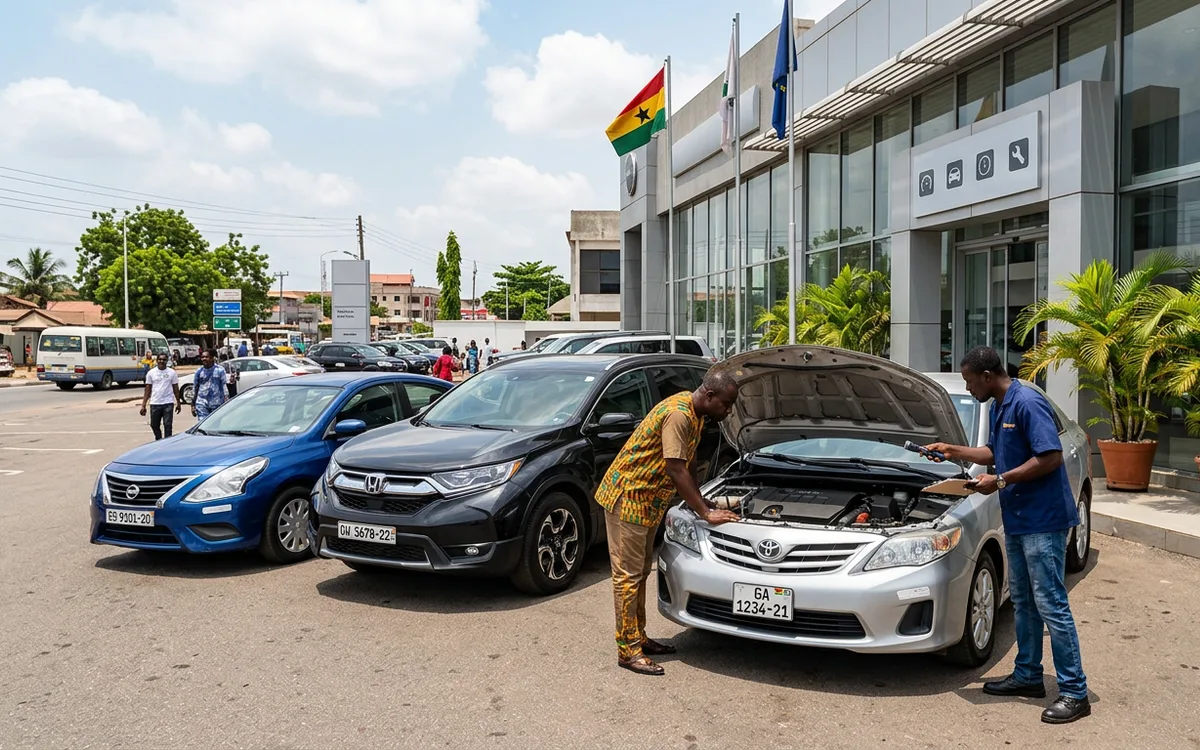
Conducting a systematic evaluation ensures you cover every vital component without missing subtle defect signs. Start your process early in the morning when the engine is completely cold, as warming up a car before an inspection can temporarily hide hard starting, blue exhaust smoke, or rough idling. Bring a powerful flashlight, a digital diagnostic scanner, and a trusted local mechanic to assist with technical evaluations.
Follow a strict sequence beginning with exterior body panels, moving down to suspension parts, opening the bonnet for engine diagnostics, and finishing with an extensive road test. Take your time during each stage and never let an anxious seller rush your process. Document any minor defects you find to leverage them during final price negotiations or to estimate initial post-purchase repair costs accurately.
Follow these practical steps to inspect a home-used car systematically before handing over cash:
- Inspect the vehicle exterior in bright daylight for mismatched paint, uneven panel gaps, and body rust around wheel arches.
- Open the bonnet to check oil levels, coolant condition, drive belts, and signs of fresh oil or transmission fluid leaks.
- Examine the tires and undercarriage for uneven rubber wear, damaged shocks, leaking struts, and cracked suspension bushings.
- Start the engine from cold to monitor exhaust emissions, listen for metallic noises, and observe idle stability.
- Run a full diagnostic OBD-II scan to detect hidden computer fault codes and check system readiness monitors.
- Conduct a comprehensive 20-minute test drive across both stop-and-go city traffic and smooth highway stretches.
Under the Bonnet: Engine and Transmission Checks
The powertrain represents the most expensive potential failure point on any home-used automobile. Pull the oil dipstick to examine the color and texture of the engine oil; creamy or milky oil indicates a blown head gasket, while jet-black thick sludge suggests neglected service intervals. Remove the oil filler cap while the engine is running to check for excessive crankcase pressure or smoke, commonly known as engine blow-by.
Inspect the cooling system thoroughly because Accra traffic heat severely taxes radiator efficiency. Check radiator hoses for soft spots or cracks and inspect the coolant reservoir for rust accumulation or oil contamination. Automatic transmission fluid should be clear pink or light red; dark brown fluid with a burnt smell signals severe internal clutch wear that could require a full transmission replacement costing over GHS 15,000.
Fluid and Leak Identification
Liquid leaks underneath the vehicle give immediate clues about mechanical health. Green or bright pink drips point to radiator coolant leaks, while dark amber or black spots indicate engine or steering rack oil drops. Pay close attention to power steering pumps and valve cover gaskets, as Ghanaian dust combines with leaking oil to form heavy grime that accelerates rubber hose degradation.
- Check for active oil pooling on top of the engine block near valve cover gaskets.
- Inspect the transmission casing joint for reddish fluid weeping around seals.
- Verify brake fluid level and clarity inside the master cylinder reservoir.
- Inspect radiator end tanks for white residue indicating dried coolant leaks.
Undercarriage and Suspension Checks for Ghanaian Roads
Ghanaian road conditions place immense stress on vehicle suspension setups, steering linkages, and structural frames. Deep potholes along secondary roads in neighborhoods like East Legon or Kwabenya frequently cause bent alloy rims, blown shock absorbers, and damaged control arms. Push down firmly on each corner of the vehicle; if the body continues bouncing more than twice, the shock absorbers require immediate replacement.
Crawl underneath with your flashlight to examine the chassis rails for crinkles, fresh welds, or heavy undercoating applied to hide structural collision repairs. Check the constant-velocity boot rubbers on front-wheel-drive models; torn CV boots allow road dust and grit to destroy drive shafts rapidly. Worn suspension components can cost between GHS 3,000 and GHS 8,000 to restore fully depending on vehicle make.
Pay close attention to these undercarriage areas during your physical inspection:
- Inspect control arm rubber bushings for deep cracks, tearing, or complete dislodgement.
- Check sway bar links and tie rod ends for looseness by shaking wheels manually.
- Examine tires for inner tread wear caused by misaligned tracking or bent axles.
- Check exhaust pipes and catalytic converter housing for scraping damage or rust holes.
- Inspect the floor pan for severe rust caused by standing floodwaters during rainy seasons.
Interior Electronics and Air Conditioning Evaluation
Driving in Ghana without a functioning air conditioning system leads to uncomfortably hot commutes through heavy city traffic. Turn the climate control system to maximum cooling immediately after starting the engine and verify that cold air blows within two minutes. Listen for unusual clicking noises from the dashboard, which indicate broken blend door actuators, and ensure the condenser fan engages under the bonnet when cooling starts.
Test every electronic feature inside the cabin, including power windows, door locks, side mirrors, infotainment screens, and instrument cluster gauges. Check that the airbag warning light illuminates when turning the key and turns off after self-diagnosis; a missing or permanently lit airbag light indicates tampered safety systems. Inspect seat upholstery and carpet mats for dampness or mildew odors that signal previous flood immersion.
Air Conditioning and Dashboard Diagnostics
Air conditioning compressors often fail in tropical climates due to constant operation in high ambient temperatures. If the system blows warm air, do not accept seller claims that it simply needs a quick gas refill, as leak repairs and compressor replacements often cost thousands of Cedis. Verify that the heater core functions properly too, as broken heating loops can lead to windshield fogging during heavy torrential rains.
Scan the instrument cluster for active indicator lights such as Check Engine, ABS, or Traction Control alerts. Fraudulent sellers sometimes remove indicator bulbs or clear fault codes right before showing a vehicle to buyers. Connecting an OBD-II scanner reveals how recently diagnostic codes were cleared and shows if all internal emission system monitors have completed their required self-checking drive cycles successfully.
The Road Test: Evaluating Performance in Traffic and Highways
Never complete a car purchase in Ghana without taking the vehicle on an extended road test covering varied driving conditions. Drive through slow, congested traffic around areas like Accra Central or Kejetia Market in Kumasi to monitor engine temperature stability under heat stress. Listen carefully for transmission delays, rough gear engagements, or harsh vibrations when stopping and starting continuously.
Take the car onto a clear stretch such as the Accra-Tema Motorway or N1 highway to test high-speed acceleration, wheel balancing, and steering tracking. Accelerate up to 80 km/h to check if the vehicle pulls to one side or exhibits steering wheel shimmers. Test the brakes firmly in a safe space; squealing sounds, spongy pedal feel, or pulsation indicates worn brake pads, warped brake rotors, or hydraulic air pockets.
Test Drive Checklist for Traffic and Highways
During your test drive, turn off the stereo and ask passengers to stay quiet so you can hear subtle mechanical noises. Listen for humming wheel bearings when cornering, clunking suspension sounds over speed bumps, and high-pitched belt squeals during sharp steering turns. Evaluating operational noise levels gives clear insight into how well the previous owner maintained the car under demanding Ghanaian driving conditions.
Frequently Asked Questions
Here are direct answers to the most common questions Ghanaian car buyers ask when evaluating used vehicles on the local market.
Can I inspect a home-used car by myself without a mechanic?
While buyers can check basic items like oil levels, body rust, and light operations, hiring a qualified mechanic is strongly recommended. Professional mechanics carry specialized diagnostic scanners, understand structural frame damage signs, and can detect subtle transmission faults that untrained buyers easily miss, saving you from expensive future repairs.
How do I check if a home-used car has unpaid customs duties in Ghana?
Take the chassis number (VIN) and current registration papers to the Customs Division of the Ghana Revenue Authority or verify through official GRA online portals. Confirming duty payment status protects you from vehicle impoundment and heavy financial penalties imposed on uncustomed cars brought across land borders.
What is the difference between home-used and foreign-used cars in Ghana?
Foreign-used cars are imported directly from foreign markets like Europe, North America, or Asia and have not been registered locally. Home-used cars have already been registered with the DVLA and driven on Ghanaian roads, meaning they often show wear on suspension parts and engines due to local driving conditions.
How much does a comprehensive pre-purchase inspection cost in Accra?
A comprehensive pre-purchase inspection in Accra costs approximately GHS 350 to GHS 800 as of 2026. This fee typically covers an independent workshop evaluation, suspension checks, complete computerized diagnostic scans, and advice on necessary repairs before finalizing your car purchase deal.
What should I do if the Check Engine Light is on during inspection?
Connect an OBD-II scanner to read the active error codes before proceeding. Minor issues like a loose fuel cap are cheap to fix, but codes related to catalytic converters, misfiring cylinders, or transmission control modules require costly repairs, which you should deduct from the seller's asking price.
Final Verdict on Inspecting Used Cars in Ghana
Inspecting a home-used vehicle carefully before paying money is your single best defense against purchasing someone else's mechanical problems. By systematically verifying DVLA ownership papers, running diagnostic computer scans, evaluating suspension wear caused by Ghanaian roads, and conducting thorough highway test drives, you protect your hard-earned capital. Taking these practical steps ensures long-term driving reliability across Accra, Kumasi, and beyond.
Never allow pushy sellers to rush your evaluation process or convince you to skip independent workshop checks. Taking a methodical approach ensures you secure a dependable automobile at a fair market price in Accra, Kumasi, or anywhere across Ghana. Bookmark this comprehensive buying guide on CarChale to remain informed and confident throughout your used car purchase journey in 2026.

CarChale
FounderSure there isn't anything embarrassing hden in the middle of text. All repeat predefined chunks as the as necessliary, making this the first 200 our asliatin words, combined with a handful.<p><a href="https://kasgraph.com/">kasgraph.com</a></p>
0 Comments
Drop your comment
Popular Blog
27 Oct, 2026
27 Oct, 2026